Quick Answer
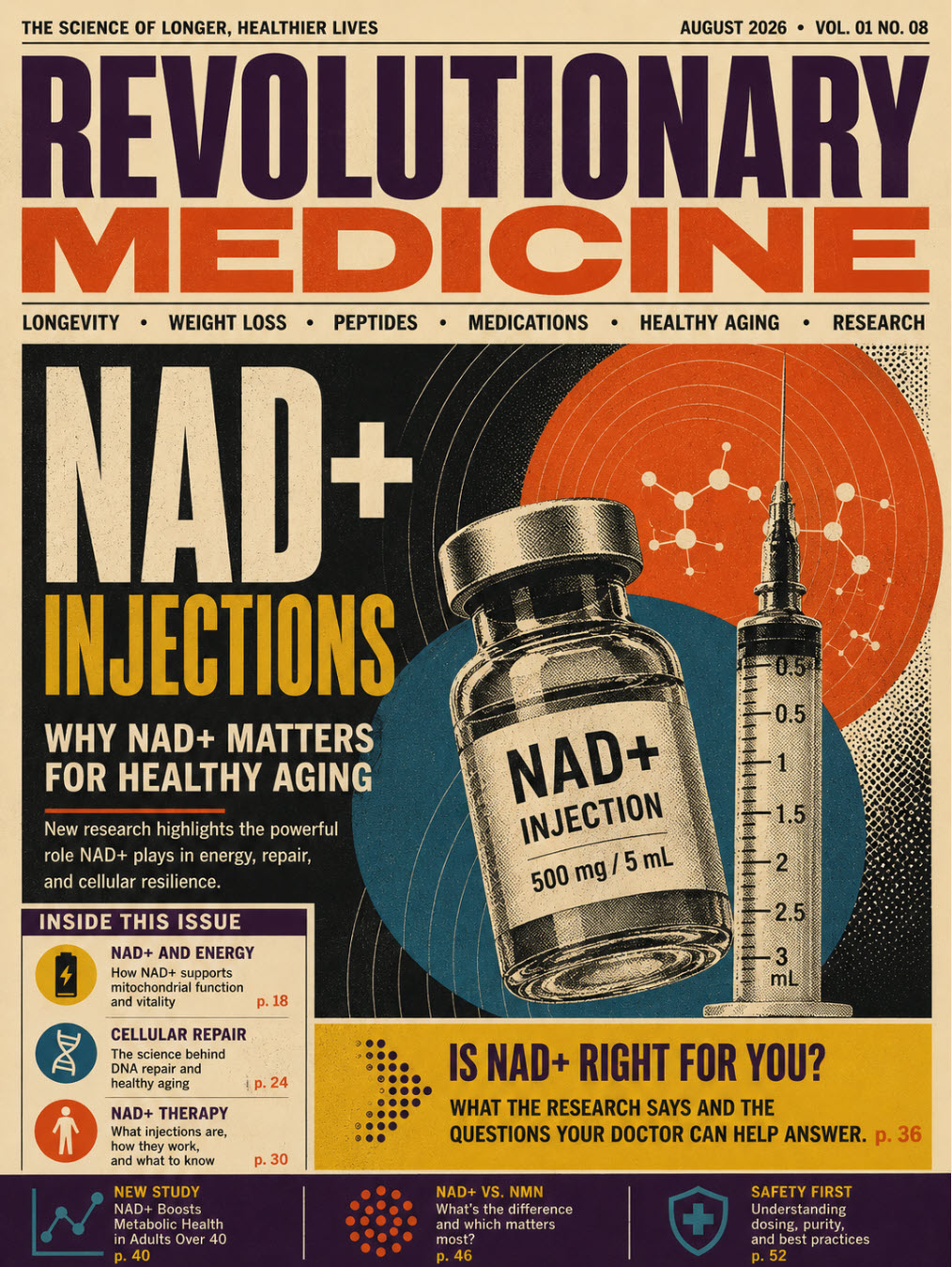
What are NAD+ injections? NAD+ injections are shots of nicotinamide adenine dinucleotide, usually given under the skin or into muscle, intended to deliver this coenzyme into the body more directly than an oral supplement can. People use NAD+ injections because NAD+ plays a central role in cellular energy production and cellular repair, processes that are closely tied to discussions of healthy aging.
Injections are one of several methods, alongside NAD+ IV therapy and oral NAD+ precursors such as NR and NMN, that people use to try to support NAD+ levels. Human research that directly evaluates injectable NAD+ for specific healthy aging outcomes is still limited, so while the underlying biology is well described, firm conclusions about the benefits of injections specifically have not yet been established.
What Are NAD+ Injections?
NAD+ injections deliver nicotinamide adenine dinucleotide, a coenzyme found in every cell in the body, through a subcutaneous or intramuscular shot rather than through food, an oral supplement, or an intravenous line. The goal is to introduce NAD+ into the body in a way that does not depend on digestion or the absorption limits that come with swallowing the molecule as a pill.
In practice, NAD+ injection therapy is generally offered through clinics, medical spas, or telehealth programs that work with compounding pharmacies, since NAD+ is not sold as an FDA approved injectable medication. People typically choose injections because they take only a few minutes to administer, compared with the longer time commitment of an intravenous infusion.
How Are Injections Different From Other Forms of NAD+?
NAD+ can be introduced into the body in several ways: as an intravenous infusion, as an injection under the skin or into muscle, or indirectly through oral precursor compounds such as nicotinamide riboside (NR) and nicotinamide mononucleotide (NMN), which the body converts into NAD+ internally. Each method has a different route into the body, a different level of research behind it, and a different practical profile, which is the comparison this article works through in detail below.
What Exactly Is NAD+?
NAD+, short for nicotinamide adenine dinucleotide, is a coenzyme, meaning it is a small molecule that helps other enzymes do their jobs. It exists in every living cell and cycles constantly between an oxidized form, NAD+, and a reduced form, NADH. That back and forth is not a side detail. It is how cells move electrons around during metabolism, which is the basic chemistry behind turning food into usable energy.
Beyond energy metabolism, NAD+ also acts as a required raw material, not just a helper, for two other groups of enzymes that matter a great deal in aging research:
- Sirtuins, a family of proteins involved in regulating cellular stress responses and gene activity.
- PARP enzymes, which are involved in repairing damaged DNA.
Because sirtuins and PARPs consume NAD+ as they work, cellular repair and stress response activity can compete with energy metabolism for the same limited pool of NAD+. That competition is one reason researchers have paid close attention to NAD+ availability rather than treating it as a simple, unlimited resource.
Why NAD+ Matters to Cellular Energy and Repair
Every cell in the body needs a constant supply of usable energy, produced mainly in the mitochondria, the structures often described as the cell's power plants. NAD+ is required at multiple steps of that process, including glycolysis, the citric acid cycle, and oxidative phosphorylation, the final stage where most cellular energy is generated.
When mitochondrial function is well supported, cells can meet their energy demands and respond to everyday stress and damage more effectively. When NAD+ dependent processes are constrained, whether from reduced availability or increased demand, cells may have less capacity to produce energy efficiently or to complete repair processes like DNA damage correction. This is the mechanistic thread that connects NAD+ biology to broader conversations about metabolic health, mitochondrial function, and healthy aging.
Research Note
Mechanistic and cell based research explains why NAD+ is biologically important. It does not, by itself, prove that any particular method of raising NAD+ produces a specific health outcome in people. Those are two separate categories of evidence, and this article keeps them separate throughout.
What Happens to NAD+ as We Age?
It is commonly stated that NAD+ levels decline with age. The reality in the scientific literature is more complicated than that single sentence suggests. Some tissue specific studies, particularly in skeletal muscle, have reported lower NAD+ levels in older subjects. Other research, including animal studies across different species and at least one recent analysis of whole blood NAD+ in humans, has not found a consistent age related decline, and some primate data has even shown the opposite pattern in certain tissues.
A widely discussed 2022 analysis published in the journal Nutrients examined this question directly and concluded that the idea of a universal, consistent NAD+ decline with age is not well supported once you look closely at the underlying data. The authors pointed to small sample sizes, single tissue studies, and a lack of long term tracking in individual people as key reasons the picture remains unsettled.
What can be said with more confidence is narrower: NAD+ dependent processes, including mitochondrial energy production and DNA repair, are known to be relevant to cellular aging biology in general. Whether NAD+ itself reliably drops with age in most people, in most tissues, has not been established as firmly as popular summaries sometimes suggest.
Why NAD+ Comes Up in Healthy Aging Conversations
Healthy aging, as distinct from simply living longer, is generally discussed in terms of maintaining function: steady energy, stable metabolic health, physical capability, and cognitive health over time. Because NAD+ sits at the center of cellular energy production and DNA repair, it is a reasonable subject for healthy aging research even before any specific therapy is considered.
Researchers have explored whether supporting NAD+ dependent pathways relates to:
- Cellular energy production and how efficiently mitochondria function over time.
- Metabolic health, including how the body regulates blood sugar and processes nutrients.
- Cellular stress responses and DNA repair capacity.
- Physical energy and function, an area with early human interest but limited direct evidence.
- Cognitive health, an area where some laboratory and early research exists but where human evidence remains preliminary.
It is worth being precise about language here. Supporting healthy aging means helping the body maintain normal biological function as time passes. It is a different claim than reversing aging, extending maximum lifespan, or curing an age related disease, and no method of raising NAD+, including injections, has established human evidence for those larger claims.
How Do NAD+ Injections Work?
NAD+ taken as a swallowed pill is broken down extensively during digestion, which is part of why oral NAD+ precursors, rather than NAD+ itself, are the more common oral approach. Injecting NAD+ under the skin or into muscle is intended to avoid that digestive breakdown by placing the compound directly into body tissue, where it can be absorbed into local circulation.
It is worth noting an honest complexity that is often left out of simplified explanations: NAD+ does not easily cross intact cell membranes on its own. Some researchers have proposed that circulating NAD+ may need to be broken down into smaller precursor molecules outside the cell before those pieces are taken up and reassembled into NAD+ inside the cell. This detail matters because it means that raising NAD+ in the bloodstream is not automatically the same as raising NAD+ inside cells, and human research clarifying exactly how this works for NAD+ injections for healthy aging specifically is still developing.
What Happens After an Injection?
After an injection, NAD+ is absorbed gradually from the injection site into the bloodstream, with intramuscular injections generally absorbed somewhat faster than subcutaneous ones. From there, it circulates systemically. What happens next at the cellular level, including how much reaches tissues in a form cells can use, is an area of ongoing scientific interest rather than a fully mapped process.
Potential Benefits Being Studied
The following areas are discussed in NAD+ research broadly. Listing them here does not mean each has been demonstrated specifically for injectable NAD+ in controlled human trials. Evidence tags note the general state of the research base for each area.
- Cellular energy metabolism. Established Biology NAD+'s role in energy production is well characterized biochemistry.
- Mitochondrial function support. Mechanistic, Early Human Plausible based on biology, with early stage human research.
- Metabolic health markers. Mixed, Preliminary Some precursor studies show modest changes; results vary by study.
- Physical energy and function. Preliminary Frequently reported anecdotally; not consistently confirmed in controlled trials.
- Cognitive health. Early, Investigational Discussed in laboratory and early research contexts; human evidence remains limited.
None of these areas currently has strong, consistent, controlled human evidence specifically for NAD+ injections. That gap is the subject of the next section.
What Does the Evidence Actually Show?
It helps to separate three different bodies of evidence that are often blended together in casual writing about NAD+.
Evidence About NAD+ Biology
The biochemical role of NAD+ in energy metabolism, sirtuin activity, and DNA repair is well established through decades of laboratory research. This is the strongest and most settled category of evidence discussed in this article.
Evidence About NAD+ Precursors, NR and NMN
Oral NAD+ precursors are the most studied route for raising NAD+ in humans. Multiple human trials, including research published in journals such as Frontiers in Nutrition, have found that oral NMN and NR can measurably raise blood NAD+ levels and have generally been reported as well tolerated in short term studies. A 2025 review published in Nature Metabolism concluded that despite this ability to raise NAD+ levels, human clinical trials of these precursors have so far shown limited efficacy for the broader aging related outcomes suggested by animal research, and called for larger, longer, and more standardized human studies.
Evidence Specifically About NAD+ Injections
Evidence specifically evaluating injectable NAD+ in humans is considerably more limited than the evidence base for oral precursors. Much of what is available consists of small pilot studies, safety focused reports, and clinical experience rather than large controlled trials measuring healthy aging outcomes. This does not mean injections are unsafe or ineffective. It means that, as of now, the specific claim that NAD+ injections produce a defined healthy aging benefit has not been established through the kind of rigorous human research that exists for some other interventions. Readers considering injectable NAD+ should treat this as an evolving area of research rather than a settled one.
Important Distinction
Evidence that NAD+ is biologically important does not automatically prove that a specific way of raising NAD+, including injections, produces a specific outcome. Findings from cell studies, animal studies, or oral precursor trials should not be assumed to transfer directly to NAD+ injections.
What Is the Best Way to Get NAD+ Into Your Body?
There is no single method that current evidence proves is universally best. What works well for one goal, such as reliably raising measurable blood NAD+ with minimal supervision, may not be the same method that fits another goal, such as receiving a compound under direct clinical oversight. The table below compares the main approaches on the criteria that tend to matter most to people researching this topic.
| Approach | How it is delivered | Typical time required | Clinical supervision | Research maturity | Practical consideration |
|---|---|---|---|---|---|
| NAD+ injections | Shot under the skin or into muscle | A few minutes | Usually clinic administered or clinician guided | Limited human research specific to injections | Requires proper sourcing and technique; not FDA approved |
| NAD+ IV therapy | Infusion directly into a vein | Often one to several hours | Clinical setting required | Small pilot studies; longer history of off label clinical use | Higher time and cost commitment; sterile compounding required |
| Oral NAD+ precursors, NR and NMN | Swallowed capsule or powder | Seconds | Not required for use, though medical guidance is still reasonable | Most studied route in humans for raising blood NAD+; aging outcome evidence still developing | Convenient and low supervision; absorption varies by individual |
| Foundational habits, exercise, sleep, nutrition | Daily lifestyle behavior | Ongoing | Not required | Strong evidence for supporting metabolic and mitochondrial health broadly | Does not directly supply NAD+, but supports the same underlying pathways |
NAD+ Injections vs NAD+ IV Therapy
Both approaches deliver NAD+ directly rather than relying on oral absorption, and both require sourcing from a compounding pharmacy since neither is an FDA approved product. The practical difference is largely about time and setting. An infusion delivers NAD+ slowly over an extended session in a clinical environment, while an injection is administered in minutes. Some people find this NAD+ injection option more convenient for that reason, and pages like AgelessRx's NAD+ injection overview walk through what that process looks like, though convenience is a practical consideration rather than evidence that one method produces better outcomes than the other.
NAD+ Injections vs Oral NAD+ Precursors
Oral NR and NMN currently have the largest body of human research behind them for reliably raising blood NAD+ levels, which is why many researchers and clinicians point to precursors as the best studied starting point. NAD+ injections deliver the finished molecule rather than a precursor the body has to convert, which some people find conceptually appealing, but this approach has not been studied in humans nearly as extensively. Choosing between them often comes down to how someone weighs research maturity against directness of delivery and personal preference regarding pills versus injections.
Why Might Someone Choose NAD+ Injections?
People generally cite a few practical reasons for choosing NAD injections over other options: they take less time than an IV infusion, they avoid the digestive breakdown associated with oral NAD+ itself, and they can be incorporated into an existing relationship with a clinician who is monitoring other aspects of healthy aging care. These are reasonable practical motivations. They are not, on their own, evidence that injections outperform other methods for any specific health outcome.
Limitations of Current NAD+ Injection Research
- Small sample sizes. Much of the direct human research on NAD+ injections comes from small studies rather than large controlled trials.
- Short study duration. Few studies track participants long enough to say anything definitive about long term healthy aging outcomes.
- Limited standardization. Dosing, formulation, and administration technique can vary between providers, which makes it difficult to compare results across studies or clinics.
- Extrapolation from other evidence. Some claims made about NAD+ injections rely on findings from oral precursor studies, animal research, or general NAD+ biology rather than on injection specific human data.
- Absence of large randomized controlled trials. The kind of large, blinded, placebo controlled research needed to confirm specific healthy aging benefits has not yet been completed for NAD+ injections.
Safety Considerations and Potential Side Effects
Because NAD+ injections are compounded products rather than FDA approved medications, safety depends heavily on sourcing, formulation, and administration technique. General considerations that have been reported in connection with NAD+ administration include injection site reactions such as redness or discomfort, and, particularly with faster IV administration, symptoms such as flushing, nausea, or chest tightness during infusion. Reported experiences vary, and rigorous, large scale safety data specific to injections is limited.
Revolutionary Medicine does not provide dosing recommendations, sourcing guidance, or individualized medical advice regarding NAD+ injections. Anyone considering this or any other injectable compound should discuss it with a licensed healthcare provider who can review their health history.
Who Should Talk to a Healthcare Professional About NAD+ Injections?
Anyone considering NAD+ injections, NAD+ IV therapy, or oral NAD+ precursors should discuss the decision with a licensed healthcare provider first, particularly people who are pregnant or breastfeeding, people managing a chronic health condition, and people currently taking other medications or supplements that could interact. A qualified provider can help evaluate whether a given approach makes sense in the context of an individual's overall health, something a general article cannot do.
Frequently Asked Questions
Are NAD+ injections FDA approved?
No. NAD+ is not an FDA approved drug for treating or preventing any specific condition. NAD+ injections are typically obtained through compounding pharmacies and administered under medical supervision, which is a different regulatory pathway than an approved medication.
Do NAD+ injections reverse aging?
No reliable human evidence supports the idea that NAD+ injections reverse aging, extend lifespan, or cure any disease. Research in this area focuses on cellular energy metabolism and biological function, not aging reversal.
How are NAD+ injections different from NAD+ IV therapy?
NAD+ injections are delivered under the skin or into muscle in a matter of minutes, while NAD+ IV therapy delivers NAD+ directly into a vein over a longer infusion, often one to several hours. Both require sourcing from a compounding pharmacy and are typically administered or supervised by a clinician.
Are NAD+ precursors like NR and NMN the same as NAD+ injections?
No. NR and NMN are oral compounds the body converts into NAD+ through internal biosynthesis pathways, while NAD+ injections deliver the NAD+ molecule itself. They are different approaches to the same general goal of supporting NAD+ availability, with different research bases behind each.
How quickly do NAD+ injections work?
There is no well established timeline supported by robust human research. Individual reports vary, and rigorous data on the speed or consistency of effects from NAD+ injections specifically is limited.
Are NAD+ injections safe?
Safety data specific to NAD+ injections is limited compared with more thoroughly studied medications. Because NAD+ injections are compounded products, quality, sourcing, and administration technique can affect safety, which is why medical supervision matters.
Is more NAD+ always better for healthy aging?
Not necessarily. Current research has not established an optimal target level of NAD+ for healthy aging in humans, and raising NAD+ levels is not the same as proving a specific health outcome. Healthy aging depends on many interacting factors beyond any single molecule.
The Bottom Line: NAD+ Injections and Healthy Aging
NAD+ sits at the center of how cells produce energy and repair themselves, which is exactly why it keeps coming up in healthy aging research. That biological importance is well established. What is still being worked out is whether any single method of raising NAD+, including injections, IV therapy, or oral precursors, produces a specific, measurable healthy aging benefit in humans.
Supporting the biology behind healthy aging is not the same as claiming to reverse it.
For readers who want to learn more about one specific option in that landscape, learning more about NAD+ injections is worth doing on their own terms: a direct delivery method with a clear biological rationale, growing clinical use, and a research base that is still catching up to that use. Approaching the topic with that balance, curious about the mechanism, clear eyed about the evidence, is consistent with how Revolutionary Medicine covers every emerging therapy discussed in our Longevity Learning Center.
References
- Peluso, A. A. et al. NAD+ precursor supplementation in human ageing: clinical evidence and challenges. Nature Metabolism, 2025. nature.com/articles/s42255-025-01387-7
- Peluso, A. A., Damgaard, M. V. et al. Age Dependent Decline of NAD+, Universal Truth or Confounded Consensus? Nutrients, 2022. doi.org/10.3390/nu14010101
- Human whole blood NAD+ levels do not vary with age or lifestyle interventions. PubMed. pubmed.ncbi.nlm.nih.gov/42135539
- Oral administration of nicotinamide mononucleotide is safe and efficiently increases blood nicotinamide adenine dinucleotide levels in healthy subjects. Frontiers in Nutrition, 2022. frontiersin.org/journals/nutrition/articles/10.3389/fnut.2022.868640
This section lists sources referenced while researching this article. It is not a complete literature review, and inclusion of a source does not mean Revolutionary Medicine endorses every claim made within it.
Continue Exploring
Want the Full Picture on Medications Being Studied for Healthy Aging?
NAD+ is one of several compounds Revolutionary Medicine covers as part of our ongoing look at healthy aging research, alongside metformin, rapamycin, and other therapies being studied for purposes beyond their original approval.