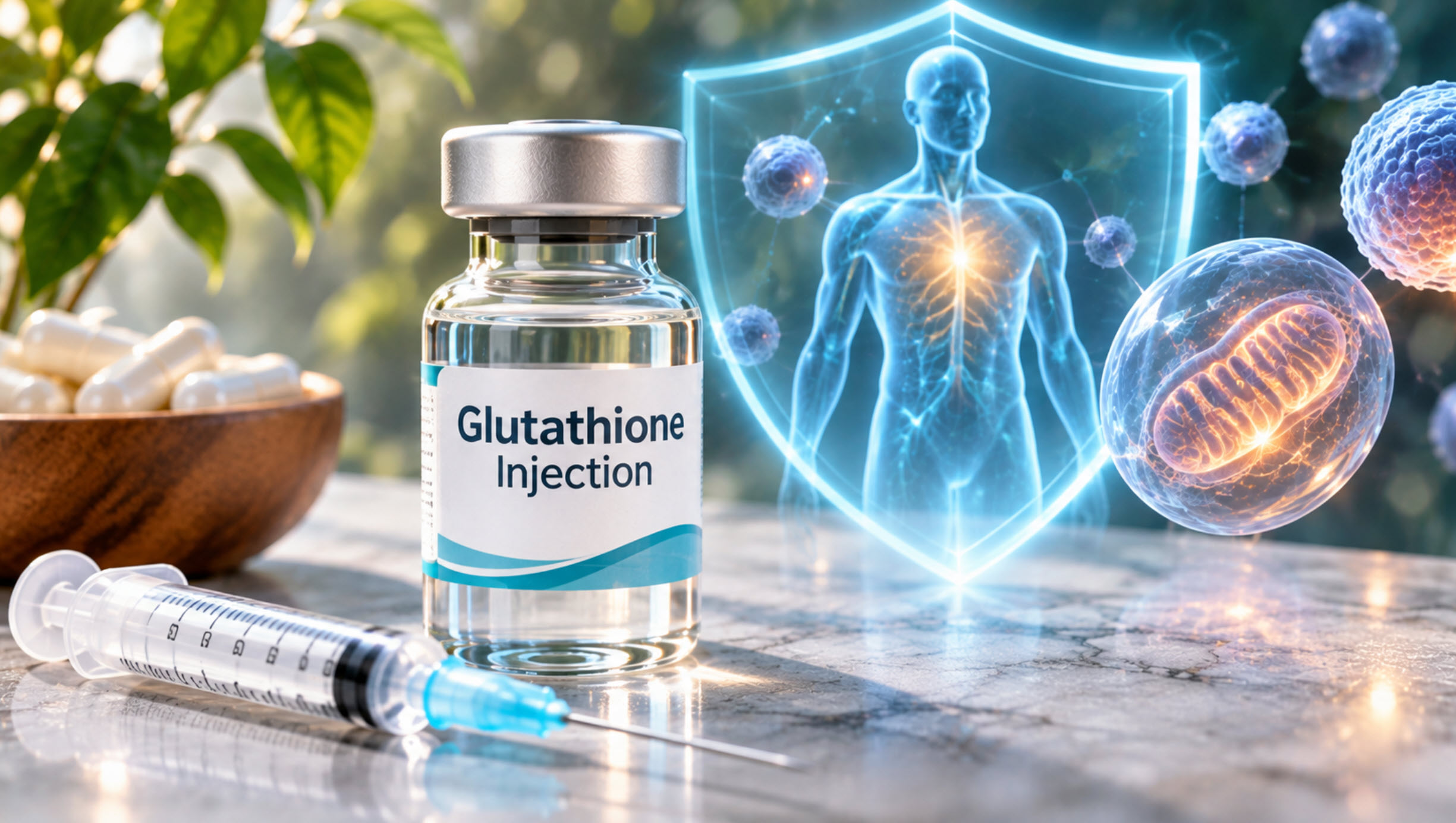
As people age, the body's ability to manage oxidative stress becomes increasingly important. Everyday processes such as energy production, immune activity, and cellular metabolism naturally generate reactive molecules that can damage cells when they accumulate beyond the body's ability to control them.
One of the body's primary defenses against this damage is glutathione, a naturally occurring antioxidant found in nearly every cell.
Glutathione helps protect cellular structures, supports normal detoxification processes, and participates in maintaining the balance between oxidants and antioxidants.
Because glutathione availability can change with age and certain health conditions, researchers are investigating whether supplementation, including injectable formulations, could help support antioxidant defenses.
Although the science behind glutathione's biological functions is well established, questions remain about the benefits of glutathione injections for healthy aging.
Key Takeaways
- Glutathione is a naturally occurring antioxidant that the body produces in nearly every cell to help manage oxidative stress.
- Glutathione's biological role is well established, but evidence specific to injectable glutathione for healthy aging remains limited.
- Injectable formulations bypass digestion, which has encouraged interest, though this does not by itself mean better long-term outcomes.
- Safety considerations for glutathione injections include injection-site reactions, product sterility, and FDA-reported contamination concerns in some compounded products.
- Nutrition, physical activity, sleep, and avoiding tobacco all support the body's antioxidant systems independent of supplementation.
What Is Glutathione and Why Does the Body Need It?
Glutathione is a small molecule composed of three amino acids: glutamate, cysteine, and glycine.
It is produced naturally within cells and plays an important role in protecting cellular components from oxidative damage.
Glutathione exists primarily in two forms: reduced glutathione (GSH) and oxidized glutathione (GSSG).
Reduced glutathione helps neutralize certain reactive molecules and participates in antioxidant reactions. During these processes, some glutathione becomes oxidized.
The body can recycle oxidized glutathione back into its reduced form through enzyme-driven reactions.
Maintaining this balance is important for normal cellular function.
Glutathione also participates in processes involving protein maintenance, immune signaling, and the metabolism of certain substances.
These functions explain why researchers consider glutathione an important component of the body's antioxidant defense system.
How Does Glutathione Relate to Healthy Aging?
Aging involves gradual changes in cellular metabolism, mitochondrial function, and the body's response to environmental and physiological stress.
One area of research involves oxidative stress, which occurs when reactive molecules exceed the capacity of antioxidant defense systems.
Over time, excessive oxidative stress can contribute to damage involving proteins, lipids, and DNA.
Researchers have observed changes in glutathione concentrations and antioxidant metabolism in certain tissues and populations as people age.
However, these changes are not uniform, and aging does not necessarily produce the same glutathione decline in every individual.
Scientists are investigating whether maintaining adequate glutathione availability could influence cellular resilience and age-related health outcomes.
The important distinction is that glutathione's established biological role does not automatically mean that supplementation can slow aging or prevent disease.
What Are Glutathione Injections?
Glutathione InjectionsGlutathione Injections are injectable formulations containing glutathione, generally administered through subcutaneous, intramuscular, or intravenous routes depending on the formulation and treatment protocol.
Unlike oral supplements, injectable formulations bypass the initial digestive process.
This difference has encouraged interest in whether injections may provide an alternative way to increase glutathione exposure.
However, bypassing digestion does not necessarily mean a treatment produces better long-term health outcomes.
Research comparing injectable glutathione with oral supplementation remains limited, particularly for healthy aging applications.
There is also no established clinical evidence demonstrating that glutathione injections extend lifespan or prevent age-related diseases in otherwise healthy individuals.
Glutathione injections are administered through subcutaneous, intramuscular, or intravenous routes, depending on the formulation and treatment protocol a clinician selects.
Because they bypass the digestive process, injections are of research interest as an alternative route of exposure, though this does not establish that they outperform oral supplementation for healthy aging.
How Glutathione Supports Antioxidant Defenses
Glutathione participates in several interconnected systems that help protect cells from oxidative stress.
One important function involves glutathione peroxidase, an enzyme that uses reduced glutathione to help convert certain peroxides into less reactive substances.
Glutathione also works alongside other antioxidant systems to maintain normal cellular conditions.
Its biological functions include:
Oxidative stress management
Glutathione participates in reactions that help control potentially damaging reactive molecules.
Cellular protection
It helps maintain the chemical environment needed for normal protein and cellular function.
Detoxification pathways
Glutathione conjugation helps the body process and eliminate certain compounds.
Immune function
Glutathione availability influences aspects of immune cell activity and signaling.
Mitochondrial health
Glutathione contributes to antioxidant defenses within mitochondria.
These processes are essential to normal physiology.
However, increasing glutathione through supplementation does not necessarily improve these functions beyond what the body already maintains.
Glutathione and Mitochondrial Function
Mitochondria generate much of the energy cells use to perform essential functions.
During energy production, mitochondria also generate reactive oxygen species as part of normal metabolic activity.
Glutathione helps maintain antioxidant balance within these cellular structures.
Researchers are interested in mitochondrial glutathione because oxidative damage and changes in mitochondrial function have been associated with aging and certain chronic diseases.
Laboratory studies suggest that disturbances in glutathione metabolism may influence mitochondrial stress responses.
However, human clinical research has not established that glutathione injections improve mitochondrial performance or reverse age-related mitochondrial changes.
These potential applications remain areas for further investigation.
Could Glutathione Influence Inflammation and Immune Health?
Oxidative stress and inflammation are closely connected biological processes.
Inflammatory activity can increase the production of reactive molecules, while excessive oxidative stress may influence inflammatory signaling.
Glutathione participates in maintaining the cellular environment needed for normal immune function.
Researchers have investigated relationships between glutathione status, immune cell activity, and inflammatory conditions.
Some studies suggest that altered glutathione metabolism may occur alongside chronic inflammation or metabolic dysfunction.
However, these associations do not establish that injectable glutathione reduces chronic inflammation or improves immune health in otherwise healthy adults.
More clinical research is needed to determine whether modifying glutathione levels produces meaningful improvements in these outcomes.
What Does the Research Say About Glutathione Supplementation?
Research involving glutathione supplementation has produced interesting findings, particularly in studies examining antioxidant measurements.
Some small human studies of oral glutathione have reported increases in glutathione concentrations in blood or other measured compartments.
Other research has investigated whether providing glutathione precursors, such as glycine and cysteine, can influence glutathione synthesis.
These findings suggest that certain nutritional interventions may affect glutathione availability.
However, results involving oral supplementation or amino acid precursors cannot automatically be applied to injectable glutathione.
Clinical trials specifically examining glutathione injections for healthy aging remain limited.
There is insufficient evidence to conclude that injections improve longevity, prevent chronic disease, or consistently enhance physical performance.
- Oral glutathione: Some small human studies have reported increases in glutathione concentrations in blood or other measured compartments.
- Precursor supplementation (glycine and cysteine): Early research suggests certain nutritional interventions may influence glutathione synthesis.
- Injectable glutathione: Clinical trials specifically examining injections for healthy aging remain limited, and oral or precursor findings cannot automatically be applied to injectable formulations.
What Are the Potential Risks of Glutathione Injections?
Although glutathione is naturally produced by the body, injectable treatment introduces additional safety considerations.
Potential risks include injection-site discomfort, allergic reactions, and complications associated with improper preparation or administration.
Sterility and product quality are especially important because injectable formulations bypass many of the body's normal protective barriers.
The FDA has reported adverse events involving certain compounded injectable glutathione products associated with endotoxin contamination.
Compounded glutathione injections are not FDA-approved, and their safety, effectiveness, and quality are not reviewed by the FDA before marketing.
Long-term safety data for repeated glutathione injections in healthy individuals are also limited.
Patients should discuss the potential risks, uncertainties, and alternatives with a qualified healthcare professional.
- Injection-site discomfort and allergic reactions are among the reported risks.
- Improper preparation or administration can introduce additional complications.
- The FDA has reported adverse events linked to endotoxin contamination in certain compounded injectable glutathione products.
- Compounded glutathione injections are not FDA-approved, and long-term safety data in healthy individuals remain limited.
What Should You Know Before Starting Glutathione Injections?
Interest in antioxidant support has encouraged more individuals to explore injectable treatments through telehealth providers.
However, appropriate medical oversight remains important.
Before deciding to Buy Glutathione InjectionBefore deciding to Buy Glutathione Injection, individuals should understand the treatment's intended purpose, available evidence, and potential safety considerations.
AgelessRx provides information about its glutathione injection program and approach to clinician-guided treatment.
A medical evaluation can help identify individual health considerations, review existing medications, and determine whether treatment may be appropriate.
Patients should also understand which pharmacy prepares the medication, how it should be stored, and what monitoring or follow-up support is available.
Explore Glutathione Injections Through AgelessRx
For people who want to discuss whether glutathione injections could fit into a broader, clinician-guided approach to antioxidant health, AgelessRx is a telehealth platform that pairs eligible patients with licensed clinicians following an online medical evaluation, with individualized guidance and ongoing provider support rather than a one-size-fits-all protocol.
Learn More at AgelessRx →Eligibility is determined by a licensed clinician following a medical evaluation. This is not a guarantee of treatment outcomes.
Supporting Antioxidant Health Beyond Supplementation
The body's antioxidant defenses depend on several interconnected biological systems rather than one individual compound.
Adequate nutrition provides the amino acids and micronutrients needed for normal glutathione production and antioxidant enzyme activity.
Regular physical activity, sufficient sleep, and avoiding tobacco exposure also contribute to long-term cellular health.
Foods containing protein, fruits, vegetables, and other nutrient-rich ingredients can help support normal antioxidant function.
These established health practices remain important regardless of whether an individual is considering supplementation.
Nutrition
Adequate protein, fruits, vegetables, and other nutrient-rich foods supply the amino acids and micronutrients needed for normal glutathione production.
Physical Activity
Regular activity is among the practices that contribute to long-term cellular health.
Sleep
Sufficient sleep supports the body's broader antioxidant and metabolic systems.
Avoiding Tobacco
Avoiding tobacco exposure is an established practice that supports normal antioxidant function.
The Future of Glutathione and Healthy Aging Research
Glutathione plays an essential role in protecting cells from oxidative stress and maintaining normal metabolic function.
Its relationship with mitochondrial health, immune signaling, and cellular maintenance makes it an important subject in aging research.
However, evidence supporting glutathione injections as a strategy for extending lifespan or preventing age-related disease remains limited.
Future clinical studies may help determine whether injectable glutathione provides meaningful benefits for specific populations and how those benefits compare with other approaches.
For now, understanding the difference between glutathione's established biological functions and the unproven benefits of injectable supplementation is essential.
With appropriate medical guidance and realistic expectations, individuals can make more informed decisions about how glutathione treatments may fit into their broader approach to healthy aging.
Final Takeaway
Glutathione's role in protecting cells from oxidative stress is well established, but the specific benefits of injectable glutathione for healthy aging remain under investigation. Anyone considering glutathione injections should weigh the limited injection-specific evidence, understand the safety considerations involved, and talk with a qualified healthcare professional before starting treatment.